Dear Hungry Readers,
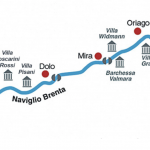
Because many of you have asked, here’s the itinerary for our new 2020 7-day culinary sailing tour in collaboration with Venetian host Mauro Stoppa. This will be a cultural and culinary exploration of the Venetian lagoon and the Brenta Riviera. Boats and traditional means of transport make for a unique journey in one of Italy’s most historically, culturally and gastronomically rich regions. This is a variation of our original tour of Venice and the lagoon islands (that will be offered once again, September 14-20—itinerary to come).
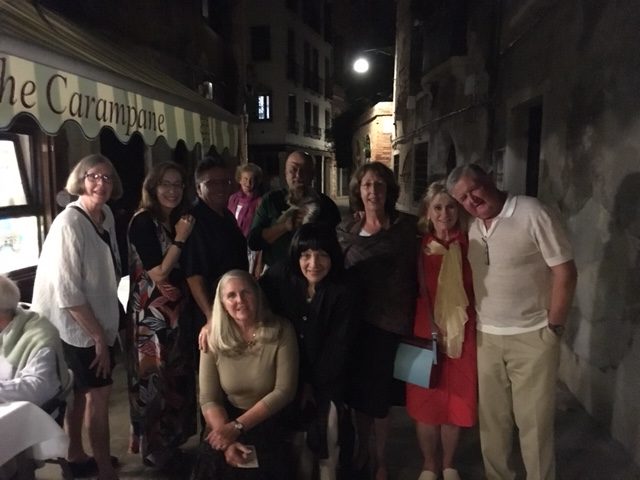
With guests at the fabled Venetian restaurant Le Antiche Carampane. From left to right, standing: Jennifer Johnston, Christine Sims, Frank Sims, Mauro Stoppa with dog Olivia, Jeanette Holcomb, Eileen Lloyd, Richard Lloyd; kneeling: Connie Huber Stoy, Julia della Croce.
OVERVIEW
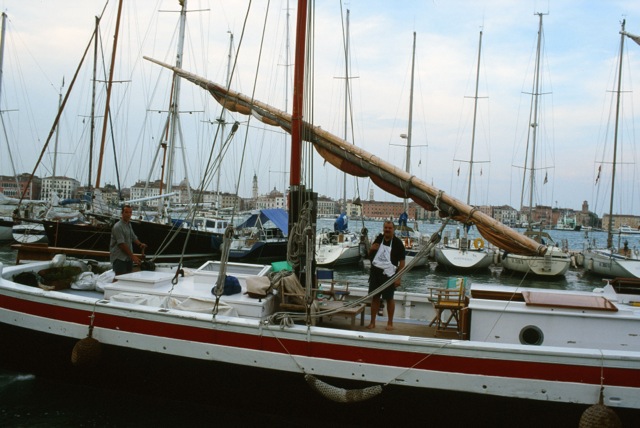
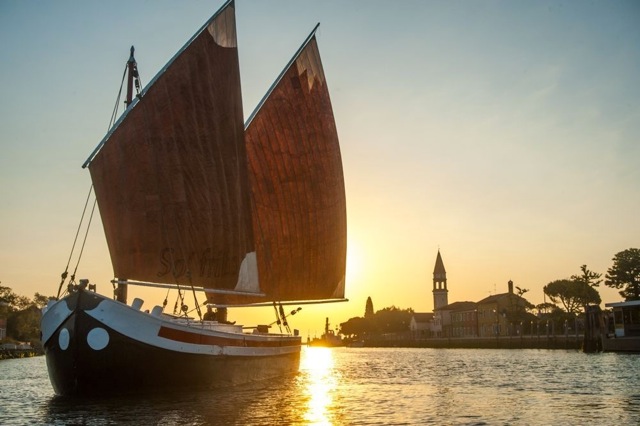
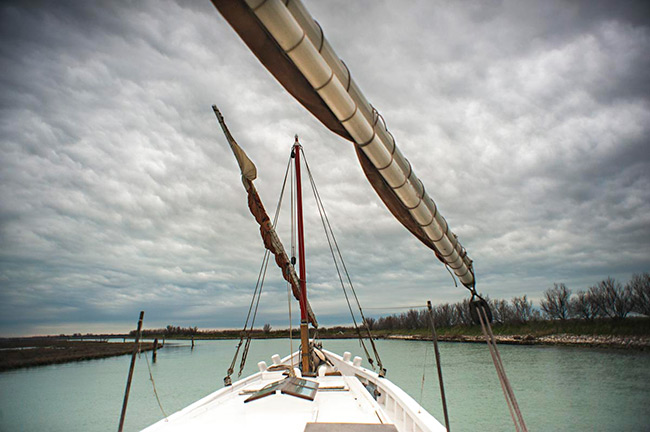
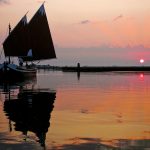
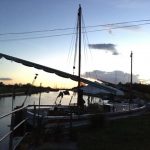
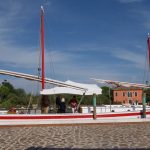
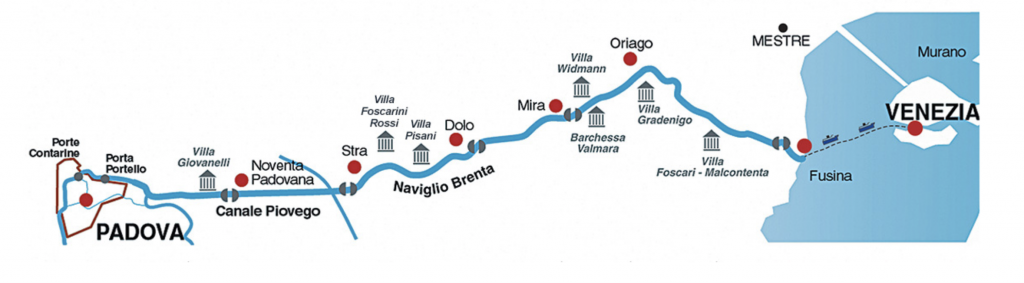
The spring 2020 journey begins onboard the Eolo, the restored historic sailing vessel owned by our host. We’ll take off from the lagoon islands and sail the tranquil waters westward into the bucolic Brenta canal and the Renaissance world of one of history’s greatest architects, Andrea Palladio. The last two days conclude with a return to Venice to explore its lesser known neighborhoods and sites. Once on the Veneto mainland, our crew will transfer us onto smaller traditional boats built to navigate the narrow, shallow canals of the ancient Venetian waterways just as the Venetians once did. Along the way, we’ll explore everything from the magnificent villas of the 16th, 17th, and 18th century merchant classes to the ancient cities and villages of art and culture along the Brenta, the natural extension of the Grand Canal. We’ll relive the extraordinary experience of noble families leaving Venice to spend summers in the countryside during the Serenissima’s gilded age, and also discover the world of ordinary Venetians. An extraordinary exploration of Venice and its region not offered anywhere else, our past guests have said that traveling with us on the Eolo was the experience of a lifetime. We think you’ll agree.
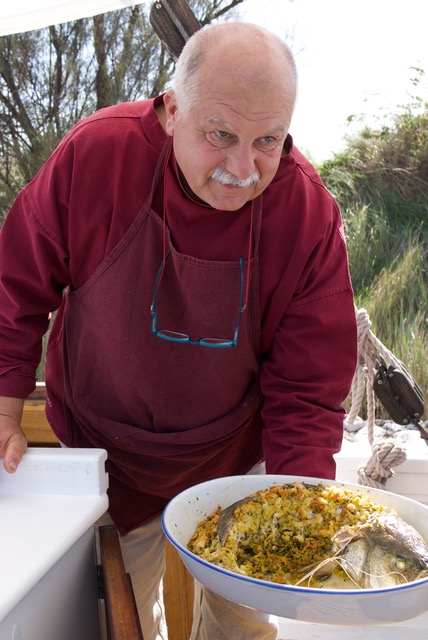
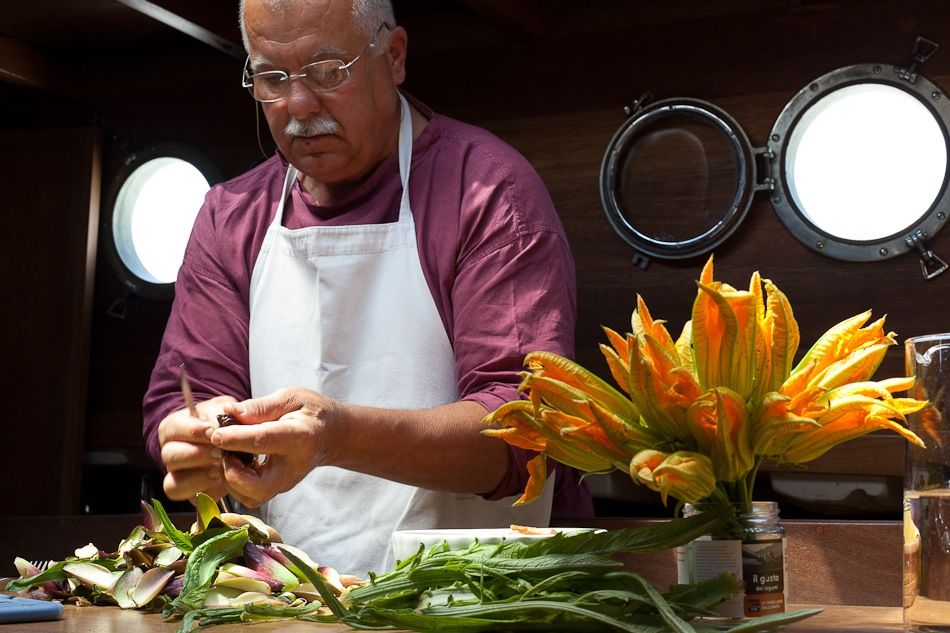
For lunch, our captain, host, and galley cook, Mauro Stoppa, serves freshly caught roasted sea bass encased in an aromatic bread crust. Photo: Nathan Hoyt/Forktales
SPRING TOUR 18-24, 2020
Culinary and Cultural Tour of Venice, its Lagoon, and the Brenta Riviera
Experience Veneto of the ancient Venetians with National Geographic author Julia della Croce partnering with Venetian host, captain Mauro Stoppa
- Sail lost Venice and its lagoon islands for immersion in the private world unknown to most outsiders, that of the native islanders—fishermen, artisans, tradesmen, sailors, farmers, and vintners.
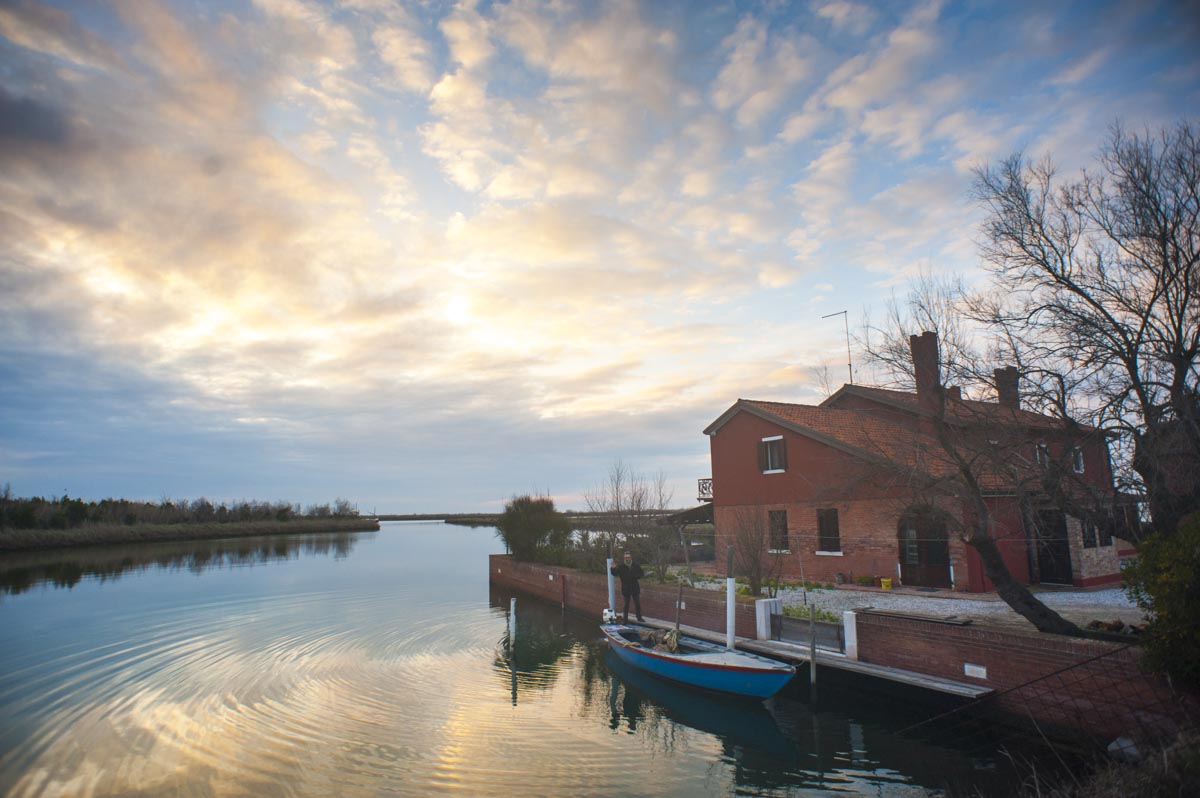
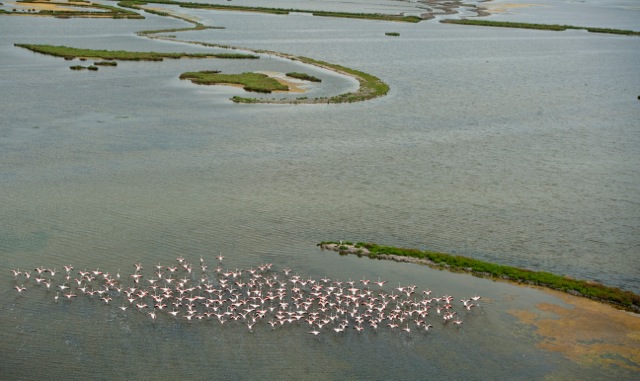
- Travel through a unique ecosystem of small canals, shallow waters and sandbanks to the channel flowing into the Brenta Riviera and be immersed in an extraordinary and unspoiled natural world along the way, stopping to visit fishermen’s huts or ancient monasteries, visiting the most important Palladian villas, dining at the table of a Venetian countess in her palace, tasting the authentic cuisine of common people and noble Venetians alike.
- Be guided by the locals who take pride in the rituals of their traditional life and will welcome you into their worlds and share the details of how they live and work.
- Journey the breathtaking Brenta Riviera and see its famous villas, gardens, and artistic treasures executed by masters including Giotto, Giambattista and Domenico Tiepolo, Donatello,Veronese, and Tintoretto.
- With our local guide, tour Padova (Padua in English), the crown jewel of the region’s splendid Medieval and Renaissance cities.
- End your journey in Venice itself for an overnight in a newly renovated, palatial apartment complete with kitchenette overlooking a lazy canal in the charming San Polo district where you can sightsee with our Venetian guide, shop, or, if you like, just ramble the backstreets of Venice beyond the city’s most famous sights on your own.
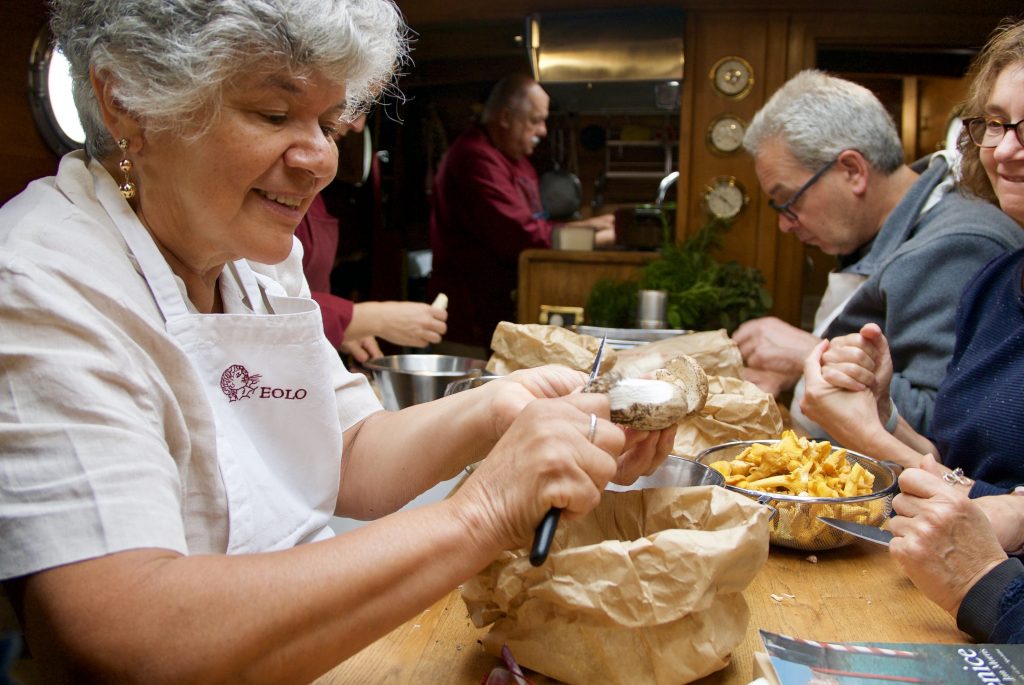
Guests helping out in the galley. Photo copyright Nathan Hoyt/Forktales
Day 1 (Includes dinner and overnight)
MEET IN VENICE
—Group meets Julia at a hotel in Venice within easy reach by public transportation (vaporetto) from Marco Polo airport. Precise location to be anounced. Check in at 3 p.m.
—Group dinner near our hotel, 7 p.m.
—Overnight here.
Day 2 (Includes breakfast, lunch, dinner, and overnight)
CROSS THE LAGOON, STOP AT SAN LAZZARO DEGLI ARMENI ISLAND; HEAD FOR THE MAINLAND; TRAVERSE THE CANAL BY TRADITIONAL BOATS CALLED CAORLINE, DINNER AT A PRIVATE VILLA VILLA
—Morning: Breakfast at the hotel. Transfer by water taxi to the Eolo. The crew will make you feel at home on deck, serving fresh local fruit, snacks and coffee prepared in the galley.
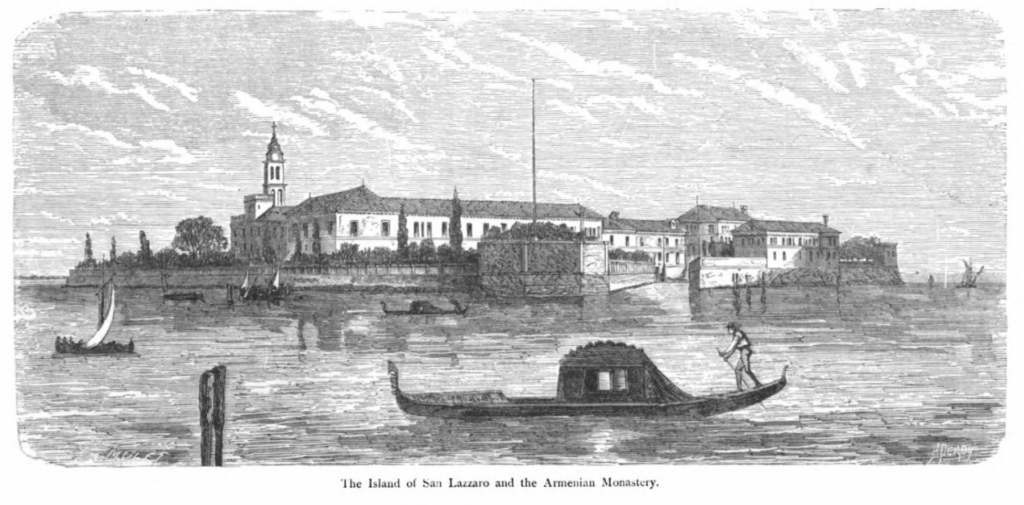
San Lazzaro c. 1877, by Charles Yriarts (1832-1848)
—Sail to the tiny monastery island of San Lazzaro degli Armeni. Like many of the lagoon islands, it has been used in various ways over the centuries. A quarantine site for ships and their passengers before they were permitted to disembark in Venice during the years of the Black Plague, it eventually became a monastery for Armenian monks in the 18th century and a place of study and eventually, a publishing center and important library that is still in use. https://it.wikipedia.org/wiki/San_Lazzaro_degli_Armeni
—Disembark and meet our local guide for a tour of the abbey and the island while Mauro and the crew prepare a delicious lunch in the galley of genuine Venetian dishes sourced from local ingredients.
—Lunch al fresco, in the open air, on deck. Superb local wines served with every course.
—Shove off from the lagoon for the Brenta Riviera, gliding the gentle curves of the canals on the Eolo until we pass the last lock. At this point, guests will transfer to a convoy of smaller vessels called caorline, traditional Venetian row boats designed to navigate the narrow and shallow waterways manned by their prideful owners who, if you ask them, have plenty of tales to tell about their beloved river. https://it.wikipedia.org/wiki/Caorlina
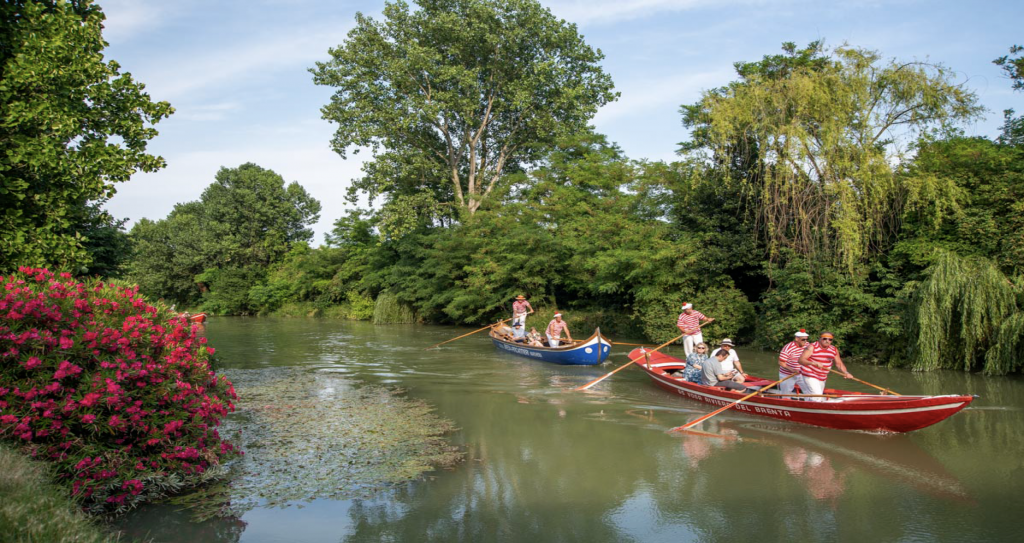
Boatmen rowing their caorline, traditional Venetian crafts on the Brenta canal. Photo credit: Mauro Stoppa
—Disembark at the spectacular Villa Foscari, better known as “La Malcontenta.” Mirrored in the waters of the Brenta, it is considered the most fascinating of the numerous 16th century country palaces designed by the legendary architect Andrea Palladio for wealthy Venetian merchants. Guided tour of the estate. https://it.wikipedia.org/wiki/Villa_Foscari
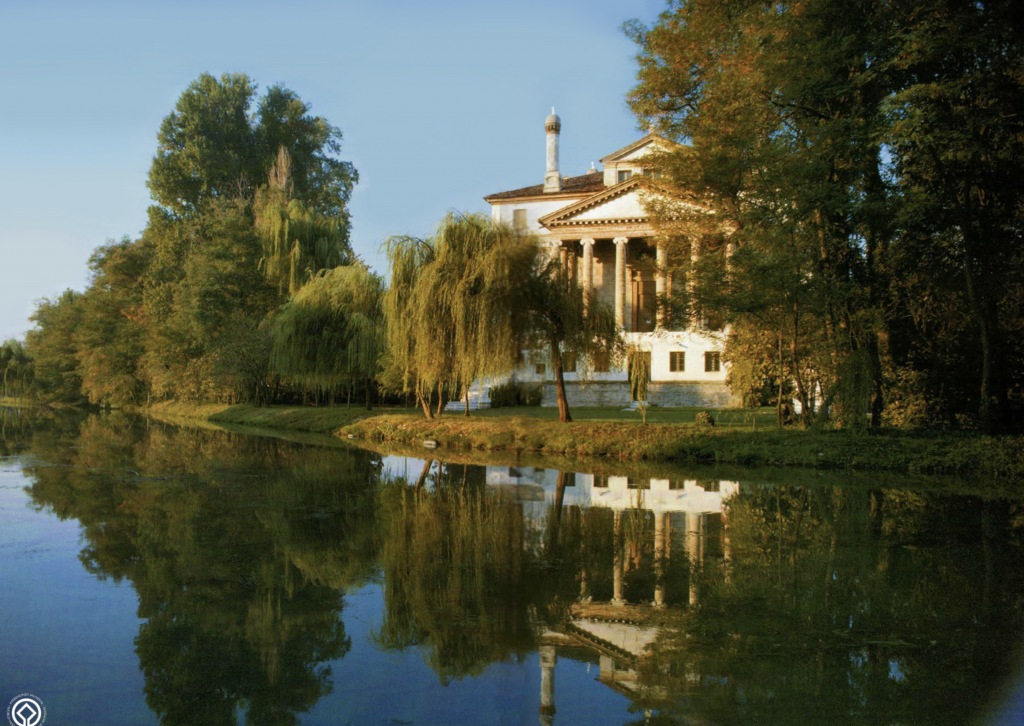
Villa Foscari, courtesy UNESCO.
—Re-board the caorline for an opulent riverside relais et chateaux, the 17th century Palladian villa Franceschi, former residence of the Doge’s jewelers. It comes into view in all its splendor at a bend in the canal, skirted by acres of forested parkland. According to tradition, all the villa’s balconies and terraces from which we will eat superb Venetian cuisine “al fresco,” in the open, should face the breathtaking panorama. http://www.villafranceschi.com/en/ https:// and en.wikipedia.org/wiki/Villa_Pisani,_Stra
—Dinner at Villa Franceschi prepared by Mauro Stoppa and the Eolo’s crew.
—Overnight at Villa Franceschi.
Day 3 (Includes breakfast, lunch, dinner, and overnight)
VENETIAN VILLAS, UNESCO WORLD HERITAGE SITES, A RESTORED ANCIENT GRANARY, A BEAUTIFUL FISHERY, DINNER AND OVERNIGHT AT VILLA FRANCESCHI.
—Transfer by van to Villa Pisani at Strà on the Brenta Riviera that links Venice to Padua. The most famous of Veneto’s villas, Villa Pisani, designated a UNESCO World Heritage site, is considered the most spectacular for its classical grandeur and allegorical frescoes by Giambattista and Domenico Tieplo and other Renaissance masters. Guided visit of the villa and its gardens. http://www.villapisani.beniculturali.it
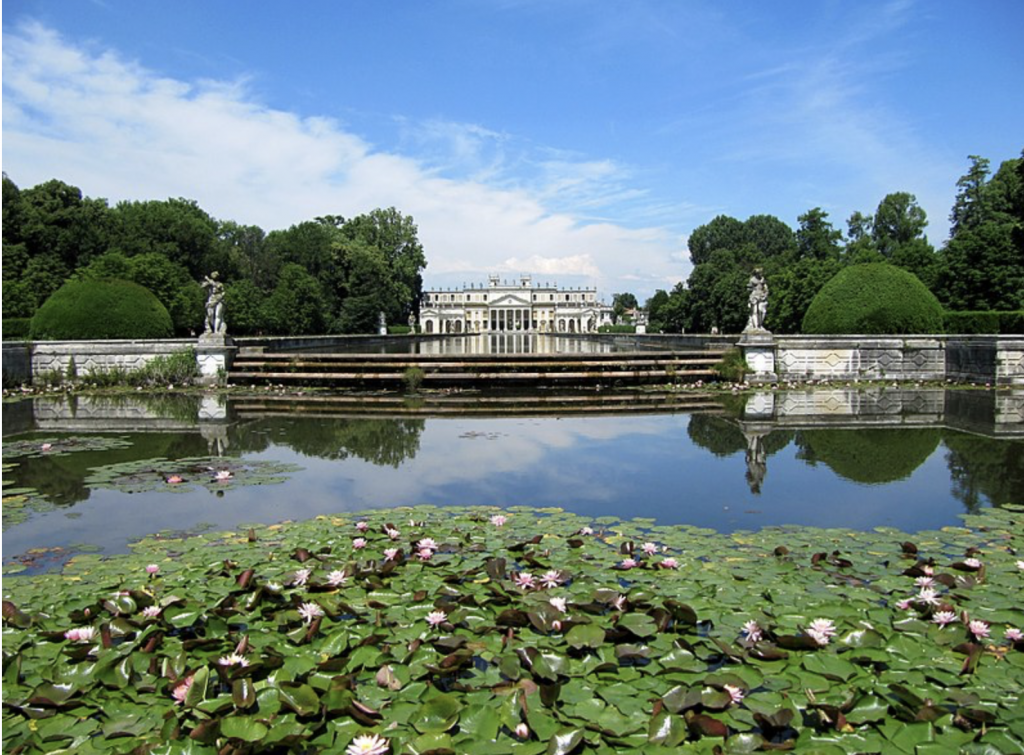
Villa Pisani, view from the reflecting pond. Photo credit: Rafaela Pagani, 2014
—Embark on the caorline for the Molini di Dolo, perfectly restored ancient mills for grinding corn and grains that were the staples of the Venetians. http://www.rivieradelbrenta.biz/ristoranti_riviera_del_brenta/i_mulini_del_dolo.htm
—Lunch at a typical restaurant near the mills at Villa Goetzen.
—Board the caorline again for the dramatic 17th century Villa Valmarana. http://www.villavalmarana.net/
—Return to Villa Franceschi by caorline, or on foot along the breathtaking paths on the properties, if you prefer.
—Once again, dinner will be prepared by Mauro Stoppa and his crew at the villa.
Day 4 (Includes breakfast, lunch, dinner, and overnight)
PADOVA EXCURSION AND A UNESCO WORLD HERITAGE SITE, DINNER AT THE PRIVATE VILLA OF COUNTESS EMO
—Transfer by van to Padova/Padua, a dazzling tapestry of medieval marketplaces, Renaissance architecture, and early 20th century facades. Home to the second oldest university in Italy where Galileo taught and patrons of the powerful Scrovegni family sponsored Giotto’s famous works.
—Guided visit of Giotto’s Cappella degli Scrovegni, Scrovegni Chapel, a UNESCO designated World Heritage Site, an extraordinary example of 15th century art and the most comprehensive collection of preserved frescoes painted by Giotto (1303-1305).
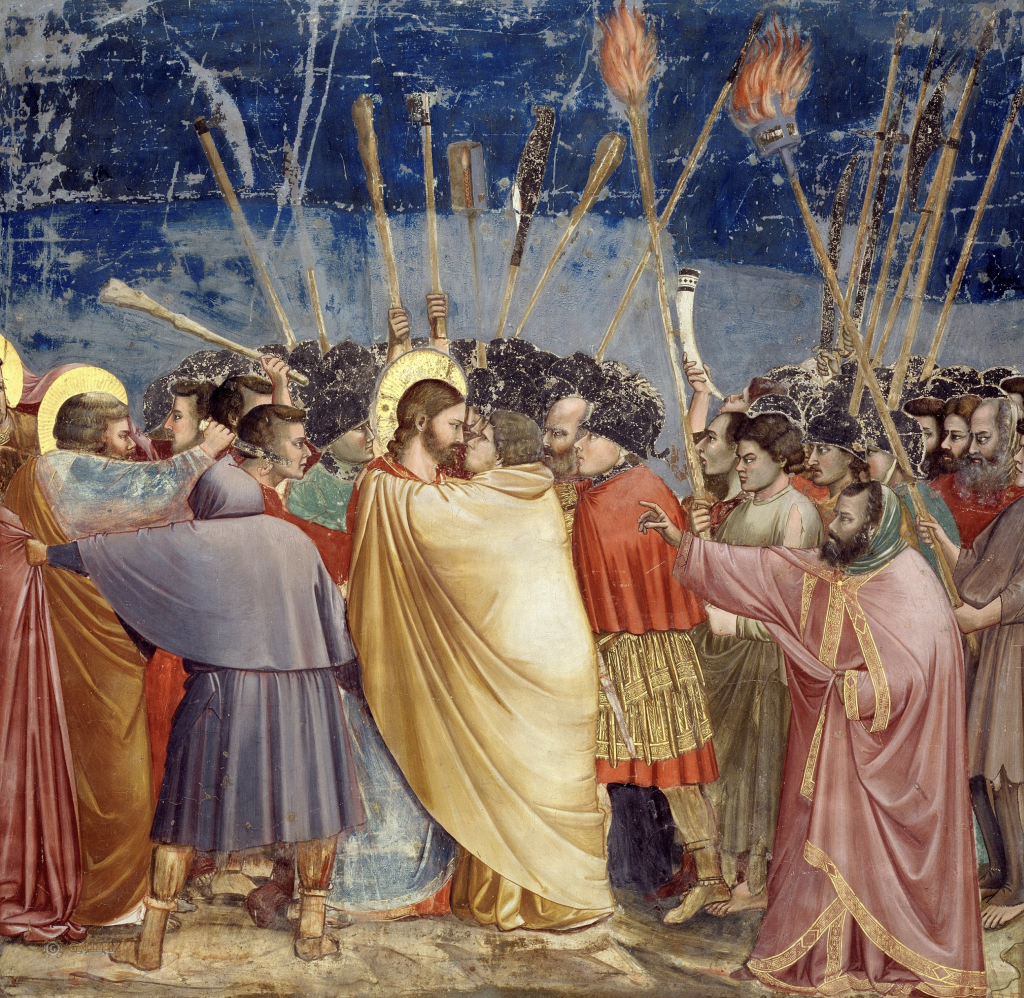
Kiss of Judas, one of the panels in the Scrovegni Chapel, Padova, by Giotto di Bondone, 1304-1306. Courtesy: Cappella degli Scrovegni
—Lunch in a typical restaurant in the historic center of Padova/Padua.
—Visit Palazzo della Ragione and the Prato della Valle piazza. Built between 1218 and 1308, the Palazzo was the government center of Padua. The interior is designed to simulate an upside down wooden boat, symbolizing the intimate relationship between the city and its waterways. The nearby Prato della Valle piazza is considered one of Europe’s most significant.
—Transfer by van to the villa residence of Countess Emo in Monselice nestled in the Euganean Hills for a dinner prepared by Mauro Stoppa and the Eolo crew. Overnight in the villa.
Day 5 (Includes breakfast, lunch, dinner, and overnight)
UNIQUE BAROQUE GARDENS, VISIT TO THE EUGANEAN HILLS, TRANSFER TO VENICE
—Transfer by van to the nearby gardens at Valzanzibio, designated by UNESCO as the first Italian baroque garden, known for its allegorical themes and unique botanical labyrinths. https://www.valsanzibiogiardino.it
—Lunch at a restaurant in the charming medieval village of Arquà Petrarca, home to the last house of the fourteenth century poet, Petrarch and considered one of the most beautiful villages in Italy. www.arquapetrarca.com
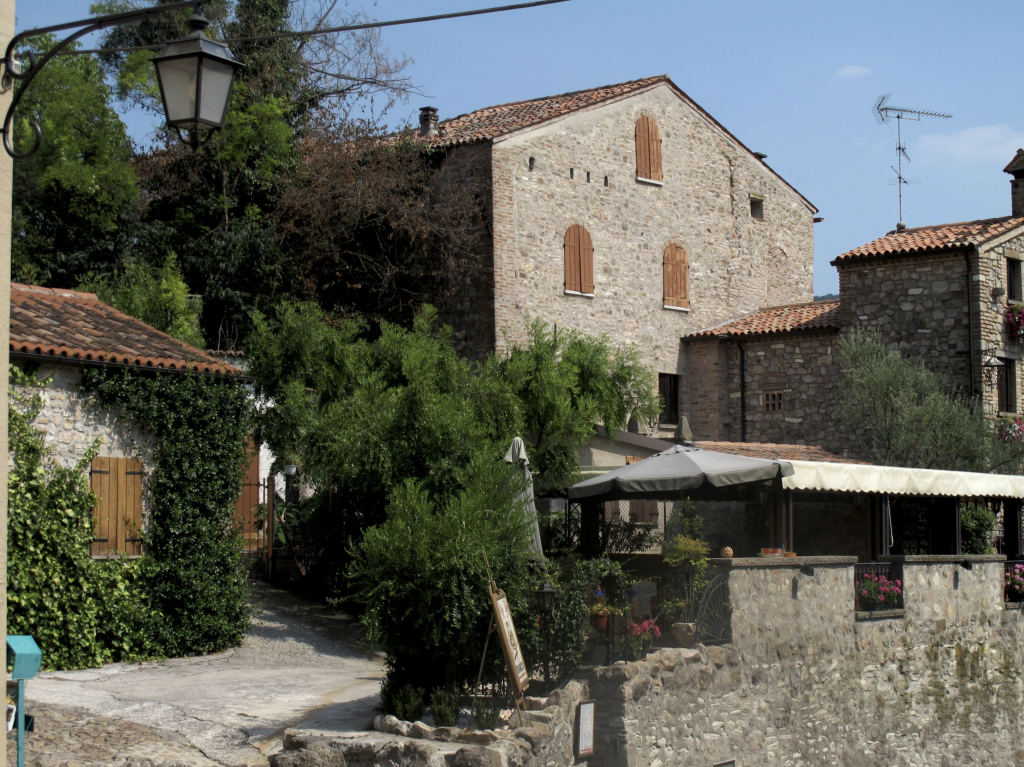
Arquà Petrarca. Photo credit: Alain Rouiller, Wikicommons
—Guided visit of the Cataio castle. http://www.castellodelcatajo.it/
—Transfer to Venice by van and water taxi.
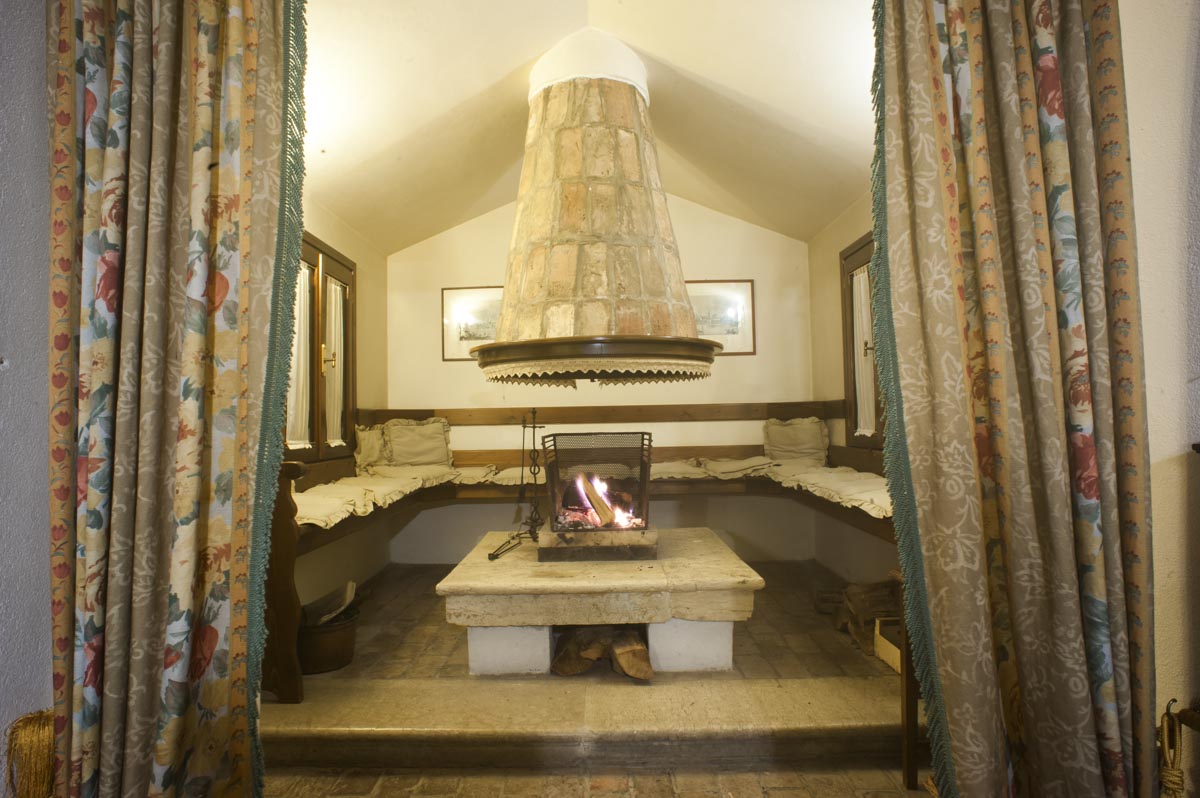
—Arrive in Venice in time to settle in before dinner. Overnight in spacious apartments in the newly renovated Palazzo Morosini degli Spezieri overlooking a lazy canal in the charming San Polo district.
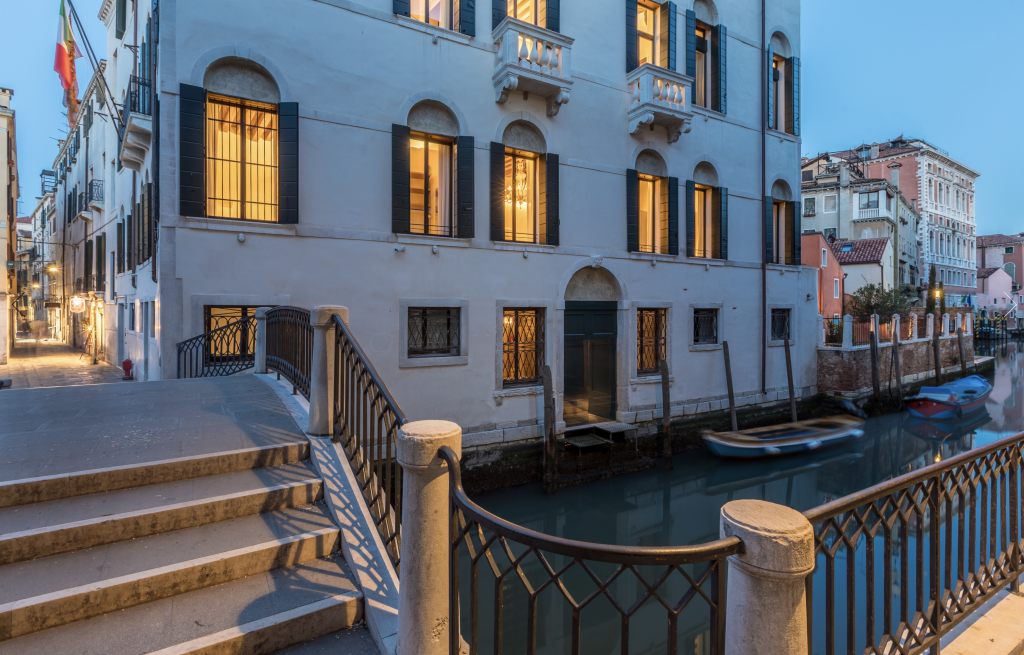
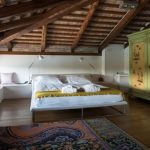
Our accommodations in Venice: newly renovated, spacious and pristine apartments complete with kitchenettes. Photo: Compliments of Palazzo Morosini degli Spezieri
Day 6 (Includes lunch, dinner, and overnight)
VENICE AND FAREWELL DINNER
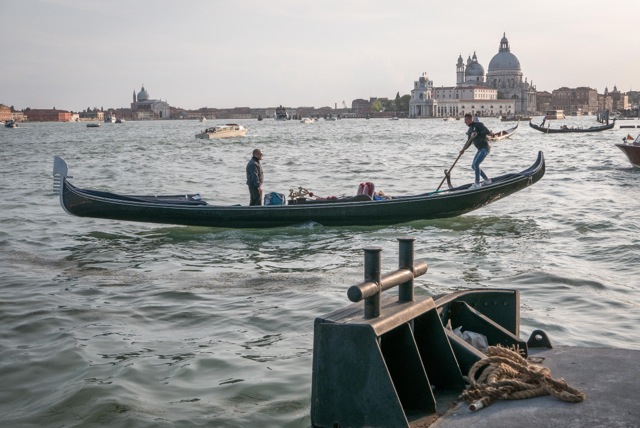
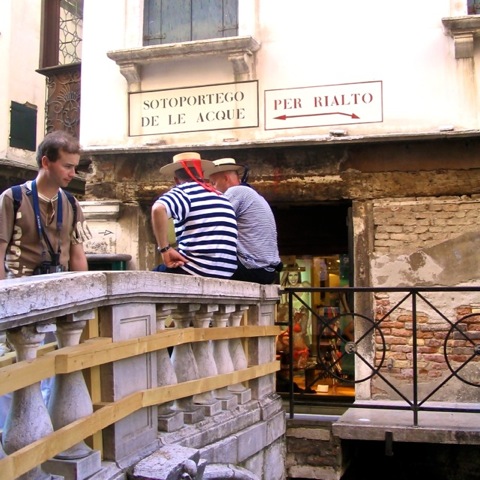
Passing gondoliers as we re-enter Venice, San Giorgio in the background. Photo copyright Nathan Hoyt/Forktales
—Guided visit to Venice’s artisan rowers guild (forcole). Onto seeing an example of the ancient printing press system (Venice was once an important publishing center). Those who would prefer a free day in Venice are permitted to explore the city on their own.
—Lunch in a typical bacaro, eatery specializing in small plates.
—Free afternoon.
—Farewell dinner at the legendary and colorful restaurant Antiche Carampane near the Rialto bridge, once a government-designated retirement home for ladies of the night that inhabited the neighborhood.
Day 7 (Includes hotel breakfast)
FINAL DAY
—Depart Venice, or extend your stay at the palazzo if you wish, and we will arrange for your reservations at your own cost.
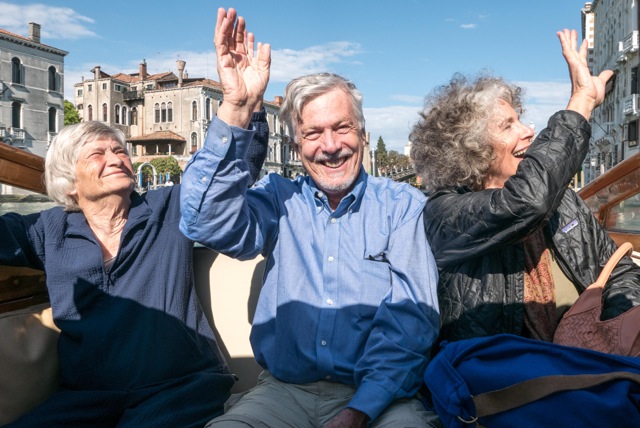
Arrivederci, Venezia, a presto—see you again soon. From left to right: Joan Gussow, Michael Thun, Lynne Moody. Photo copyright Nathan Hoyt/Forktales
Rates and Particulars:
- 6,200 Euros per person including the last night (7 nights) or 5,800 Euros for 6 nights for accommodations as detailed, breakfasts, lunches and dinners as described, private visits as per itinerary, all entrance fees, cooking lessons during our journey at your discretion, the service of your tour guide(s). Rates based on double occupancy; 20% more for single occupancy.
- 10% deposit upon reservation, refunded if the minimum of 6 guests is not reached.
- 40% upon confirmation, the balance 30 days before departure.
- Minimum 6 guests. Maximum, 10 guests.
Not Included
- Flights, travel insurance, items of personal expenditure (e.g. telephone calls, laundry etc.), discretionary gratuities to boatmen and guides, government levies or taxes introduced after publication of this program.
- Please note that if circumstances beyond our control necessitate some alteration to the itinerary shown, you will be notified of any such changes as soon as possible.
Contact: For more information and reservations: Write to Mauro Stoppa at the following email address info@cruisingvenice.com or email me with any questions you might have.